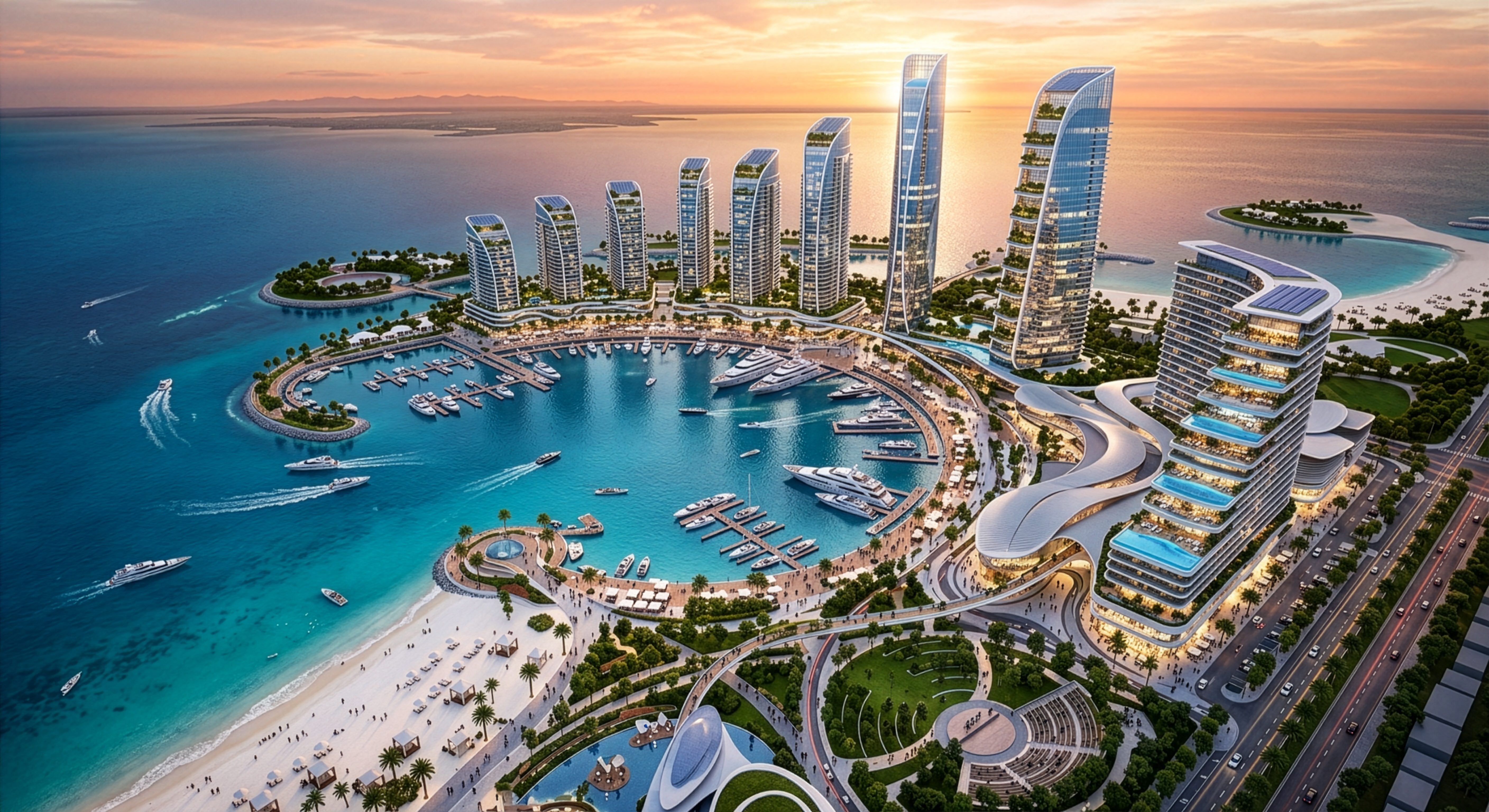
Master planning · Libya
Master Planning in Libya. We make better built environments.
A master plan earns its keep when the place it creates still holds together twenty years and many buildings later. We create and curate master planning in Libya as frameworks that imprint character on a site, then protect it through every phase of delivery.
Your project comes at a moment when Tripoli and Benghazi are both replanning. In Benghazi, the Libya Development and Reconstruction Fund has launched the GCUPI-B competition for a master plan of the central district, around 1,850 hectares. In the capital, the Greater Tripoli Master Plan was in final launch preparation in August 2026.
With nicholas.design, you gain a framework that reads clearly to authorities, investors and the people who will live there.
What we do
Master planning services in Libya
Libya has full coverage of urban plans, with two generations of master and layout plans already in place. New frameworks have to work with that inheritance, with the Urban Planning Agency and municipal authorities, and with a scarce water supply.
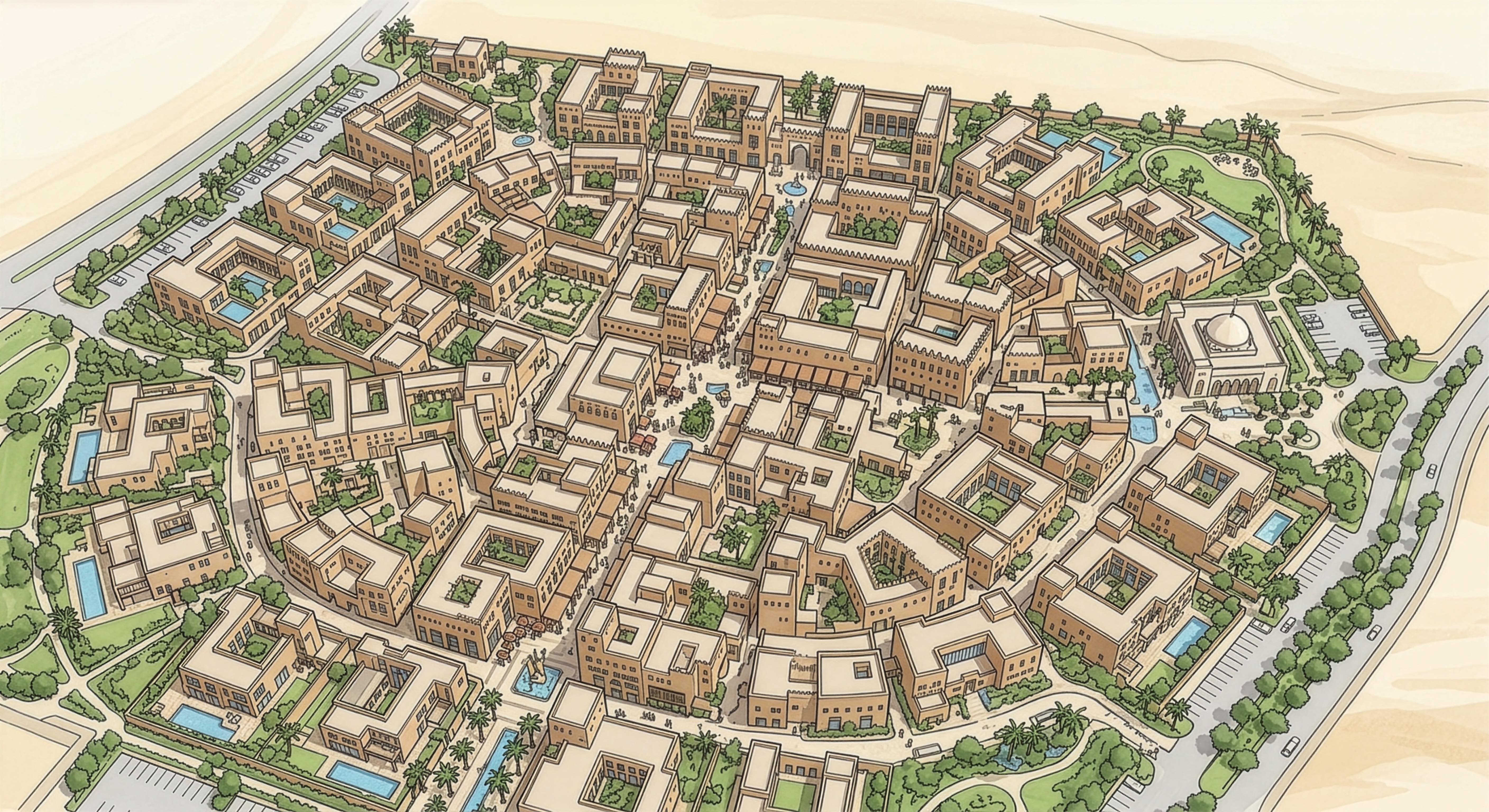
Plans for new districts
We create and curate neighbourhoods around what residents use every day: schools, mosques, shops and parks within walking distance.
Streets, plot sizes and densities follow from that, so each phase adds to a place instead of a scatter of buildings.
Mixed-use centres
We set homes, workplaces, shops and hotels next to each other so that each feeds the others' footfall.
The mix is fixed at plan stage, when it costs least to get right.
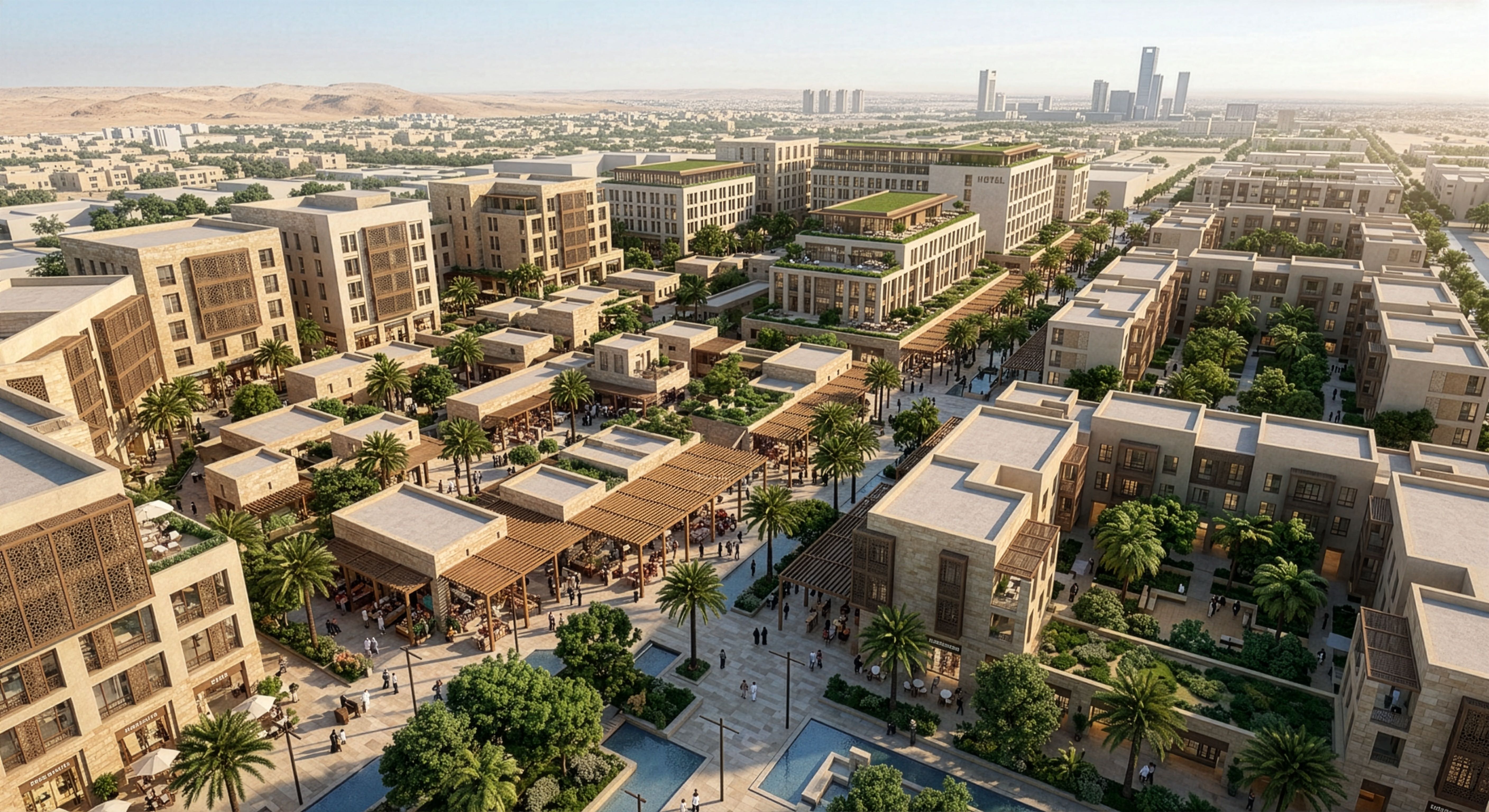
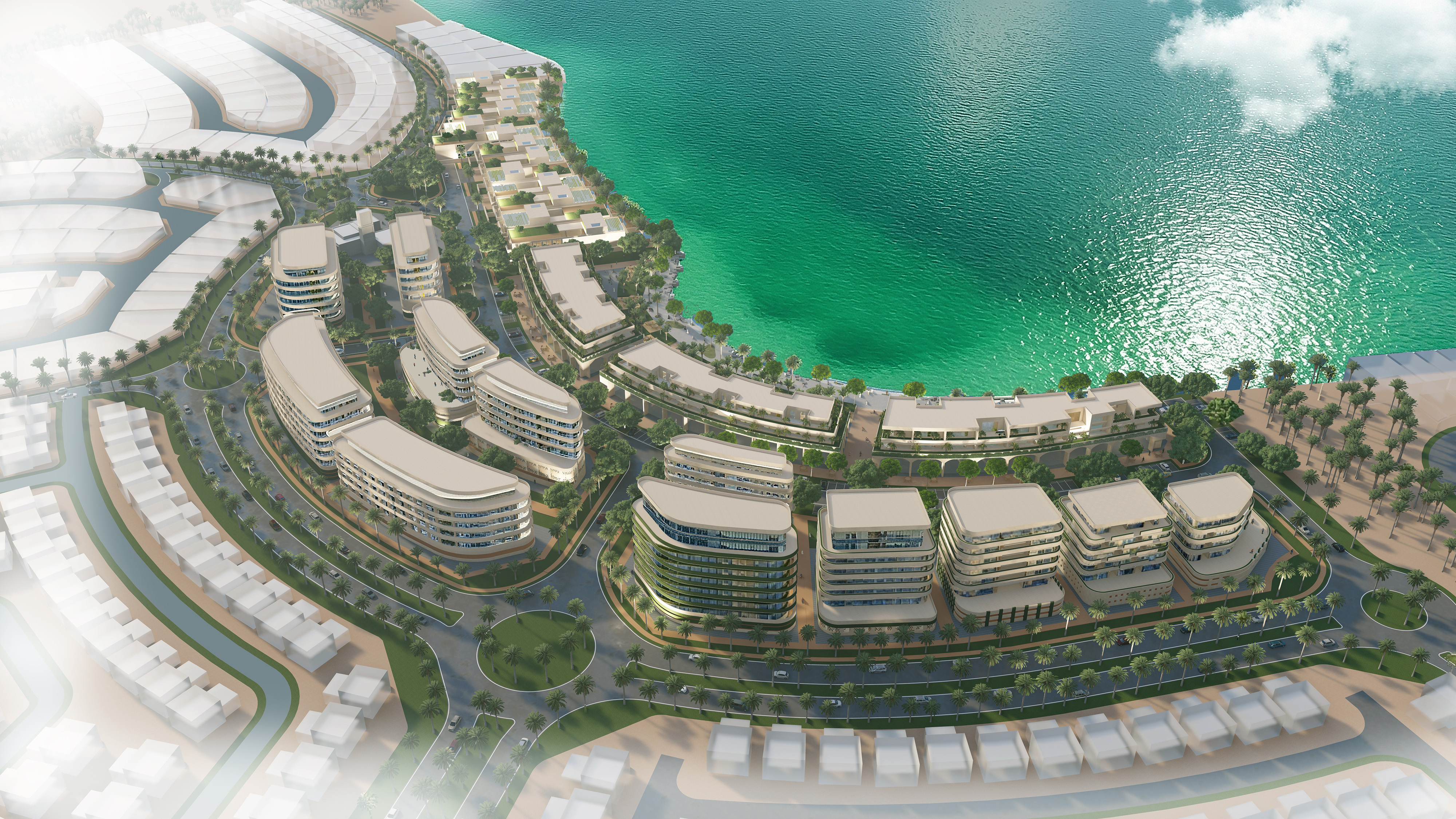
Coastal and resort frameworks
Libya's Mediterranean shoreline is a finite asset.
We plan public access to the water, protected views and a measured ratio of built to open land, so the coast still draws visitors once the last plot is sold.
From plan to street
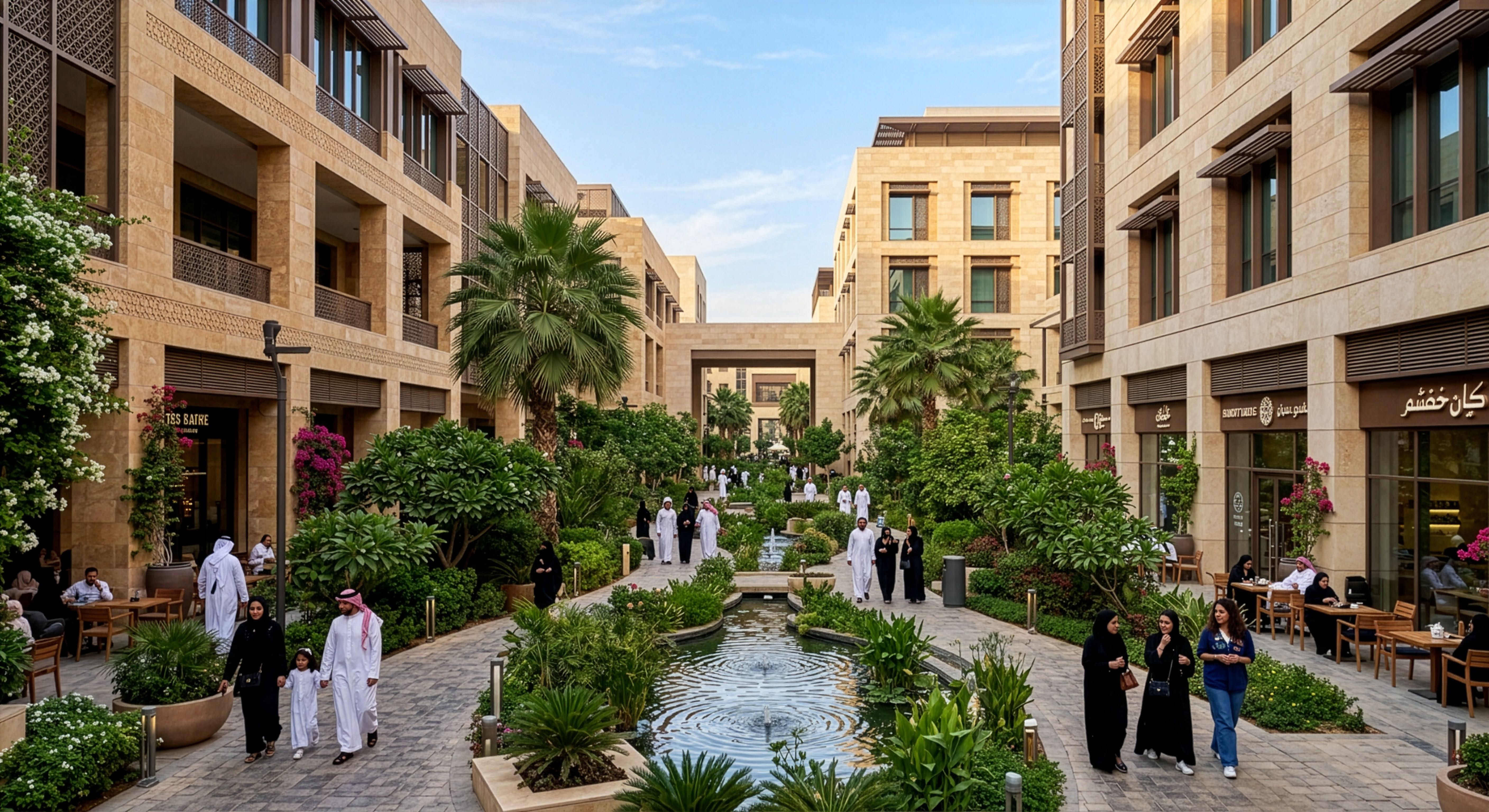
Plots and roads become a place once the spaces between them are designed with care.
That step is covered by our urban design in Libya, working at the scale of a single square or promenade.
Phasing and infrastructure
Water, drainage and roads arrive in sequence, and the plan has to read well at every stage.
We define plots, design codes and a delivery order that keep the framework coherent through changes of market and programme.
Our work
Our master planning projects
Three commissions from our GCC portfolio that show the scope and depth of master planning experience we bring to destination-scale briefs. Many of them hold homes at their core, the territory of our residential architecture in Libya.
Durrat Al Bahrain, Bahrain
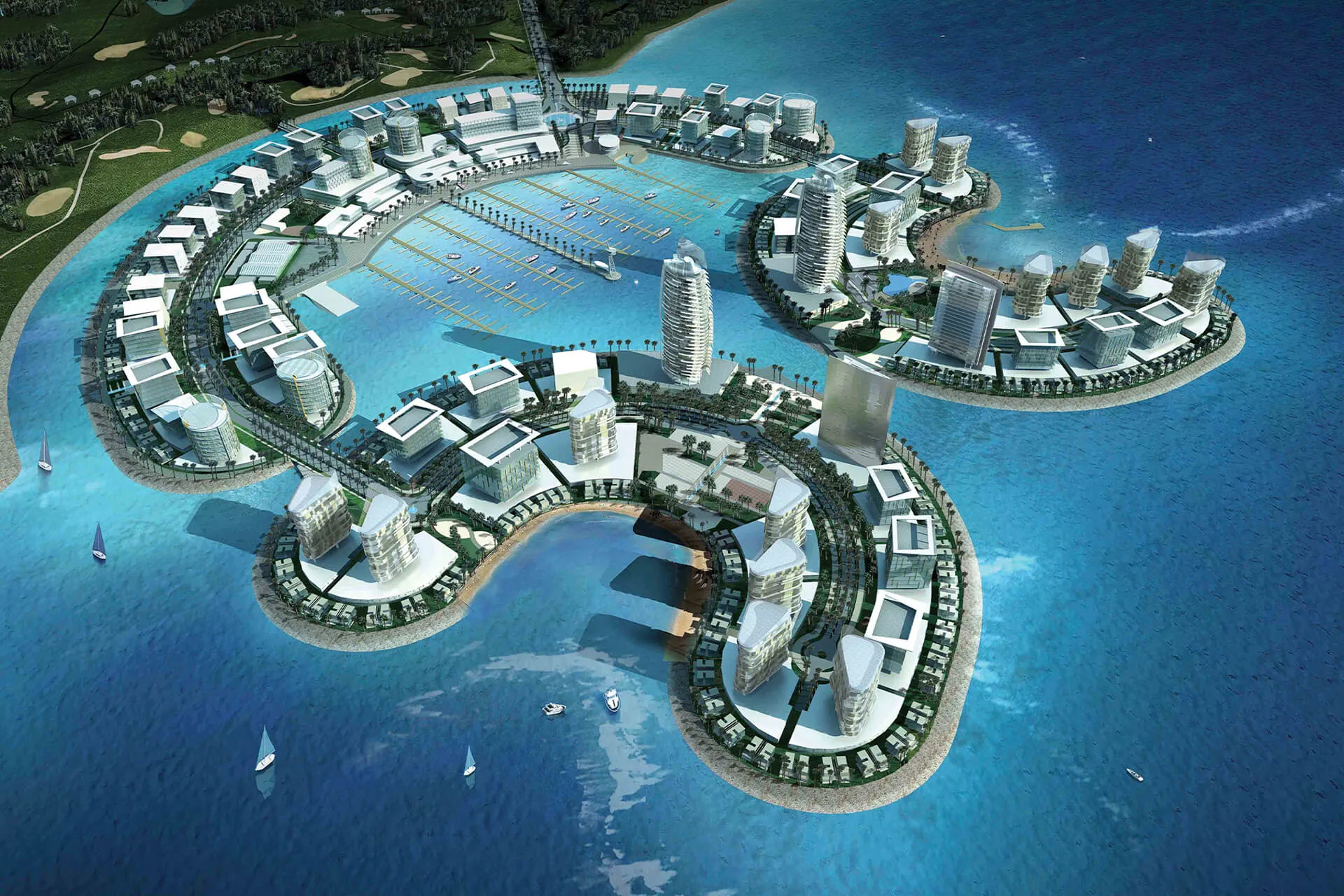
A master-planned resort destination of connected islands off Bahrain's southern coast, one of our founding director's landmark frameworks.
- Residential, hospitality, and marina uses resolved into a single legible structure
- Island and waterfront urbanism planned at destination scale
- A long-horizon framework designed to hold its character across phased delivery
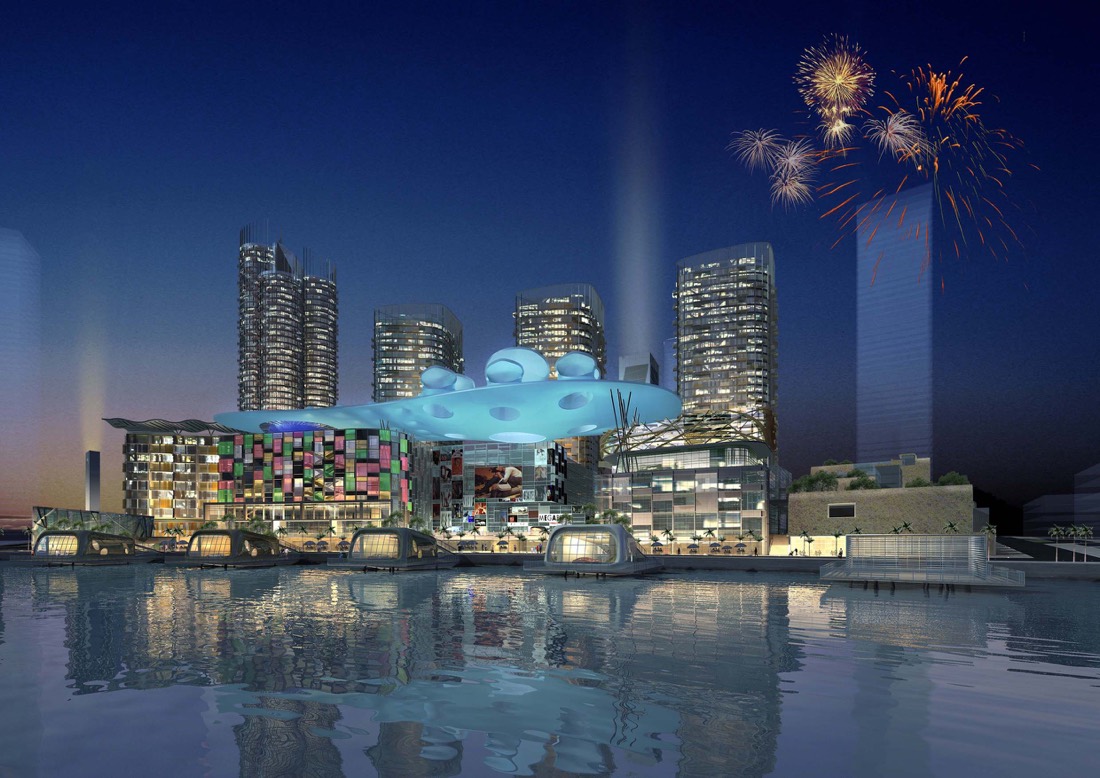
CapitaLand Bahrain Bay, Manama
A large-scale mixed-use development in Bahrain's premier waterfront district, planned as a coherent whole before the individual buildings.
- Retail podium, office towers, residential, and public realm within one master plan
- Waterfront frontage and movement network curated for a premium urban context
- Design management and lead consultancy across the development
East Point Riffa, Bahrain
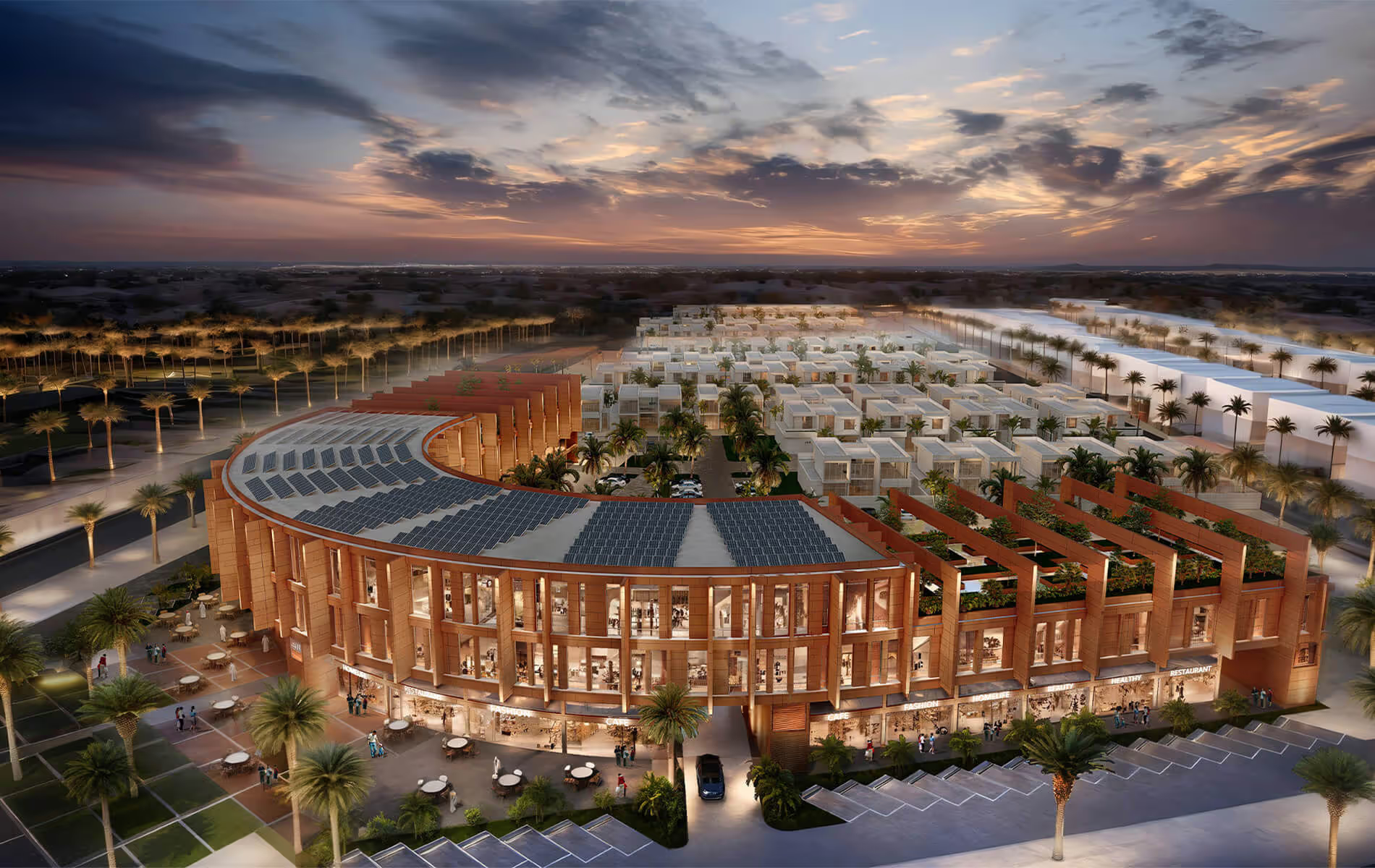
A mixed-use master plan combining retail, F&B, workspace, and public realm within a unified destination in Riffa.
- Programme and public realm planned for footfall and dwell-time performance
- Contextual framework for a suburban development in a Gulf climate
- Full scope delivered from master plan through to building design
Place
Master planning in Libya: what the market demands
Five conditions shape a master planning brief in Libya.
| City-scale replanning | GCUPI-B in Benghazi and the Greater Tripoli Master Plan set the frame for private schemes. A new master plan has to connect to these city frameworks. |
| Existing plans | Two generations of master and layout plans already cover Libya's cities. We read them first, then propose change where it adds value. |
| Water | The Great Man-Made River supplies around 70% of Libya's fresh water from a non-renewable fossil aquifer. Landscape, density and infrastructure are planned to use less of it. |
| Flood risk | Wadis carry sudden floodwater through towns after heavy rain. Drainage corridors and open space are placed where the water will go. |
| Climate | Hot, dry summers and the dust-laden ghibli wind shape street orientation, shade and the grain of blocks. |
Sustainability
Sustainability certifications
We align with international sustainability standards on every project, whether or not formal certification is required by the client brief. Libya has no national green building rating system, so we work to the international standards your project targets.

WELL · the WELL Community Standard addresses health and wellbeing at neighbourhood scale, from walkability to access to nature.
LEED · the Neighborhood Development rating assesses location, street network, walkability and green infrastructure at district scale.
BREEAM · the Communities method assesses the social, economic and environmental performance of a master plan from its earliest stage.
Proof
Why clients trust us
- 30 years of GCC and international experience
- A suite of projects delivered across Bahrain, Saudi Arabia, Kuwait, UAE, Qatar, and beyond
- MIPIM Future Projects Award, Office category
- RIBA-chartered practice
Process
How we work
We follow a clear, collaborative process from the first conversation right up to ribbon cutting. No stage is delegated; the same team members stay on your project throughout.
Discovery. We start by listening carefully. A meeting or series of meetings to understand your brief, your constraints, and what success looks like for you and the people your project will serve.
Concept and design. We develop design concepts in close collaboration with you, working through agreed stages from Concept Design through to Detailed Design and Construction Documentation. You sign off at the conclusion of each stage.
Delivery. We act as lead consultant, coordinating engineering inputs and specialist consultants on your behalf, managing procurement, and guiding the tender process and contractor selection.
Construction and handover. We stay on your project throughout the build, monitoring quality and design integrity, managing commissioning and handover, and supporting you through the Defects Liability Period.
Why nicholas.design
Why nicholas.design for your project?
Global standards. Gulf delivery.
RIBA-chartered design excellence, delivered by a team with members based in the GCC who know regional regulations, construction conditions, and cultural requirements from the ground up.
The principal you meet on Day 1 is the principal who delivers your project.
No hand-over after the contract award. Nicholas Bonaventure and the senior team stay involved from the initial briefing to the final handover.
Architecture that knows its place.
We design with Libyan culture in mind, and Libya's climate embedded from the Concept stage. There are no imported solutions adapted after the fact.

The studio
Meet the team
Our founding director, Nicholas Bonaventure, has spent decades designing some of the Gulf's most exacting projects, including the Bahrain World Trade Center, Durrat Al Bahrain, Durrat Al Bahrain Marina and the Al Sharq Office Tower in Kuwait.
nicholas.design operates a collaborative and supportive studio environment. We work in English and Arabic, and can speak other languages including Hindi/Urdu. We are non-hierarchical, principal-led, and built to give every client the attention their brief demands.
About the studio →FAQ
Frequently asked questions
Do you prepare master plans for public and private clients?
Yes.
We work for private developers, investment bodies and public authorities. The method is the same: a clear framework, tested against the programme, the market and the infrastructure it depends on.
How do you plan for flood risk?
From the first site analysis. We map the wadis and natural drainage lines, then:
- keep flood corridors free of buildings
- use parks and open space to hold and slow water
- set road levels and plot levels to move water safely
Can a master plan be delivered in phases?
Yes.
Phasing is part of the framework from the start. Each phase works on its own, with its infrastructure, public space and identity, so early residents and tenants move into a finished place.
Speak with our team →Do you prepare master plans for resorts and hotels?
Yes.
Resort master plans set arrivals, view corridors, villa clusters and the position of every hotel before any building is designed. We then carry the plan through to the buildings, as described in our approach to hospitality architecture in Libya.
Can a Bahrain-based studio deliver a master plan in Libya?
Yes.
Your master plan is led from our Manama studio by the same principal from first brief to final framework. We act as lead consultant, coordinating the engineers, specialist consultants and authorities your project involves.
Start your master planning project →Contact
Commission your master planning project
nicholas.design
Studio: Bahrain World Trade Center, Manama
Serving clients in Libya
Email: hello@nicholas.design
Hours: Sunday to Thursday, 8:30–17:30 AST
Our clients





Head office
nicholas.design
Office 2016, Level 19, East Tower
Bahrain World Trade Center
Isa Al-Kabeer Avenue, Manama 316
Kingdom of Bahrain
+973 7777 9524
Sunday to Thursday, 08:30 to 17:30 (Arabian Standard Time)
And by appointment
India office
nicholas.design
7ES6D, Mani Casadona
East Block 14-0372 LIF/04
New Town, Kolkata
North 24 Parganas 700156
West Bengal
India
Saudi Arabia
Bahrain
Follow
hello@nicholas.design