134
The Ground Plane: An organising strategy for the city
Much contemporary urban development focuses on buildings as individual elements. Yet the long-term success of cities depends on something far more fundamental: the organisation of the ground plane.
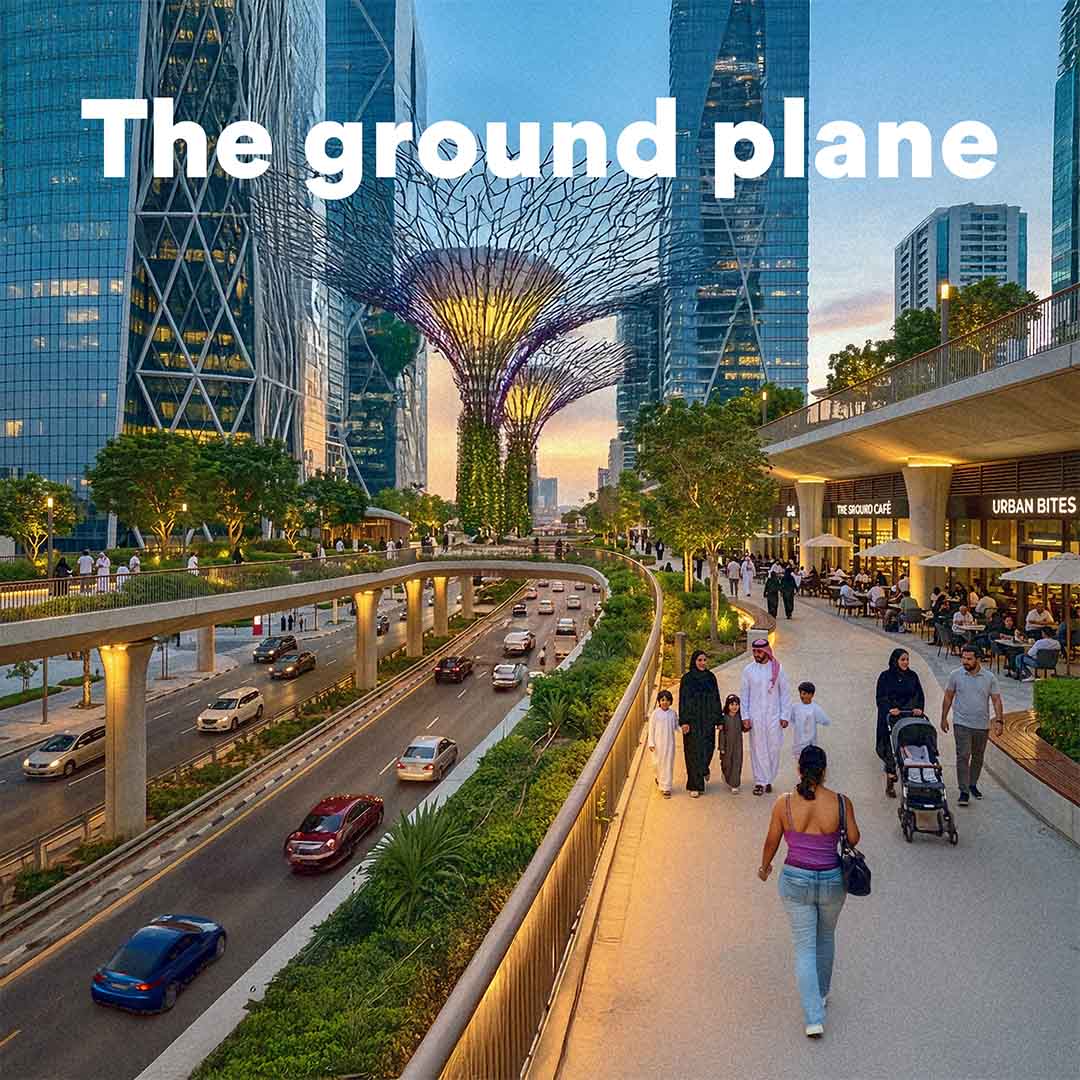
A successful city requires a continuous, connected pedestrian realm that links buildings, blocks, public spaces and transport nodes coherently. This ground plane should not be interrupted by major roads and infrastructure. Where necessary, pedestrian routes can be elevated, or vehicular corridors can be sunken, but horizontal continuity must be maintained.
In the Middle East, the quality of the ground plane is especially critical. It should be shaded, comfortable and environmentally responsive. Colonnades, arcades, deep overhangs, mature trees, landscape planting and water-sensitive design can transform pedestrian movement from an endurance exercise into an attractive daily activity.
Equally important is activation. Cafés, restaurants, retail, cultural uses and public amenities should line the routes, creating destinations as well as connections. The ground plane becomes not merely a circulation network, but the social and economic life of the city.
As cities pursue walkability, transit-oriented development and the “7-minute city,” the continuous pedestrian realm will become an increasingly important measure of urban success. Cities that prioritise connectivity, comfort and accessibility will attract investment, talent and activity. Those that remain fragmented by roads and disconnected precincts risk becoming less competitive.
The future of urbanism may be decided not by the skyline, but by what happens at ground level.