130
Planned Communities – 9: Gulf Education Communities
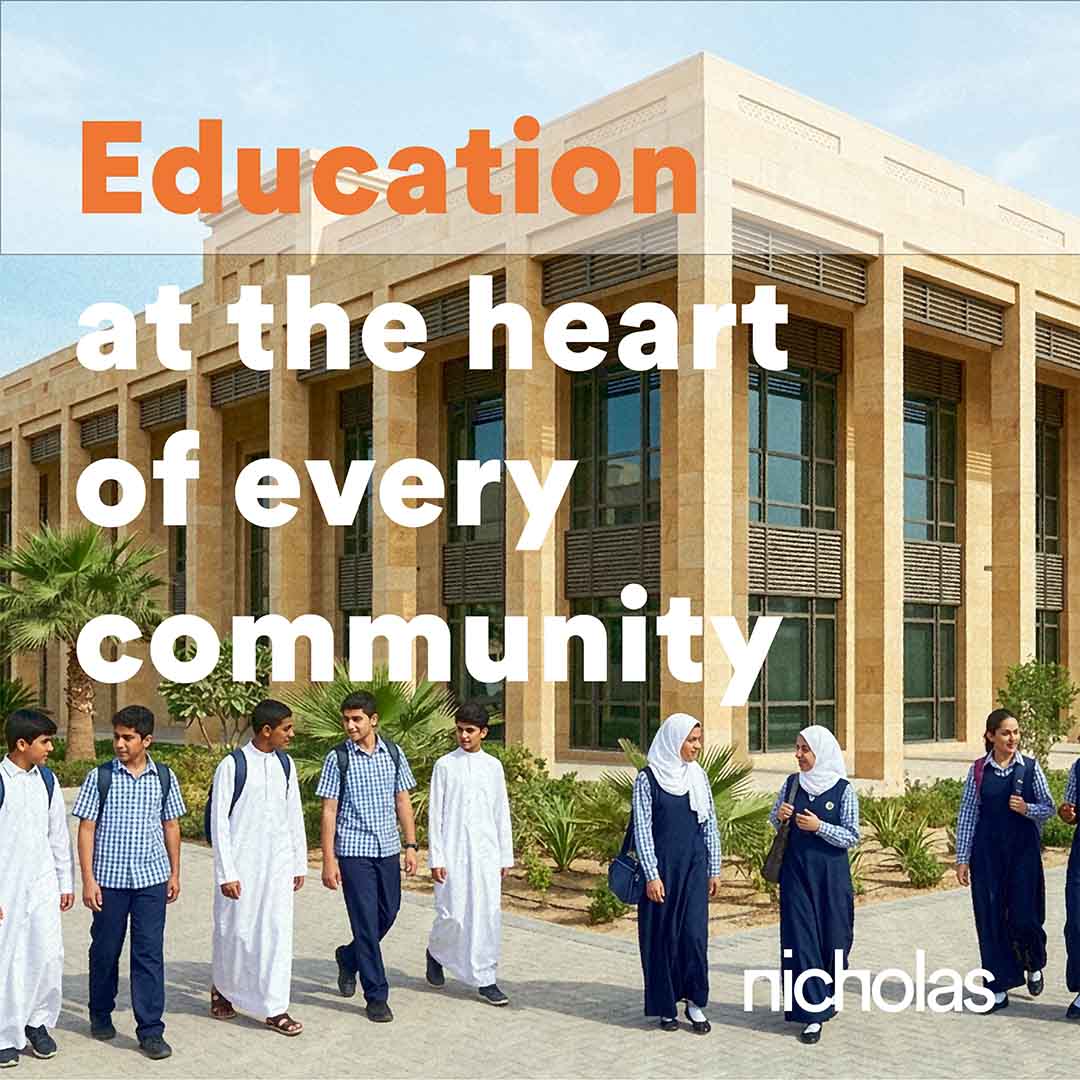
Education should not exist at the edge of communities – it should be placed at the centre.
At nicholas, we believe the most successful neighbourhoods are those where schools and learning environments are integrated into everyday civic life: within walking distance of homes, connected to public spaces and landscapes, and designed as places of gathering, interaction and social exchange as much as places of education.
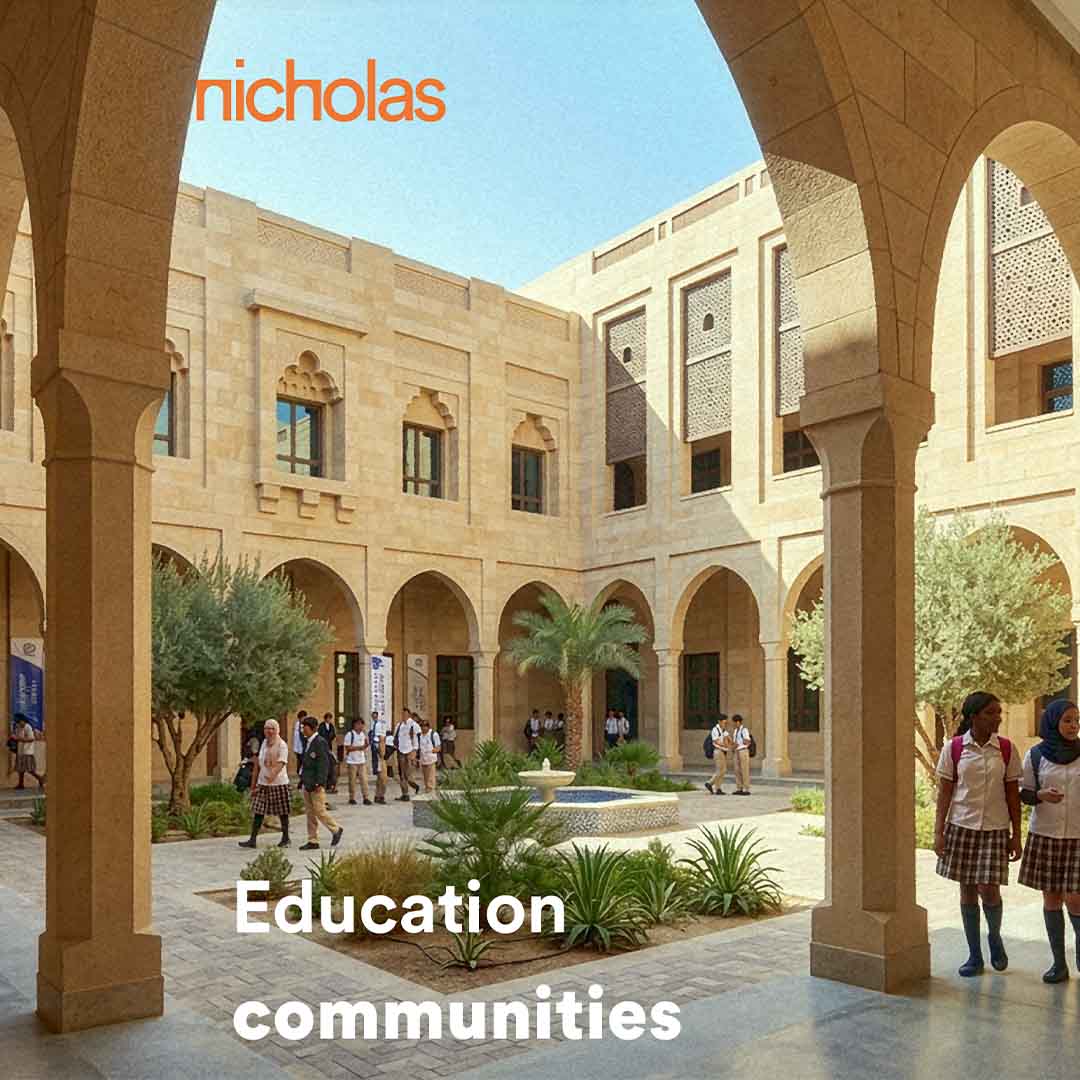
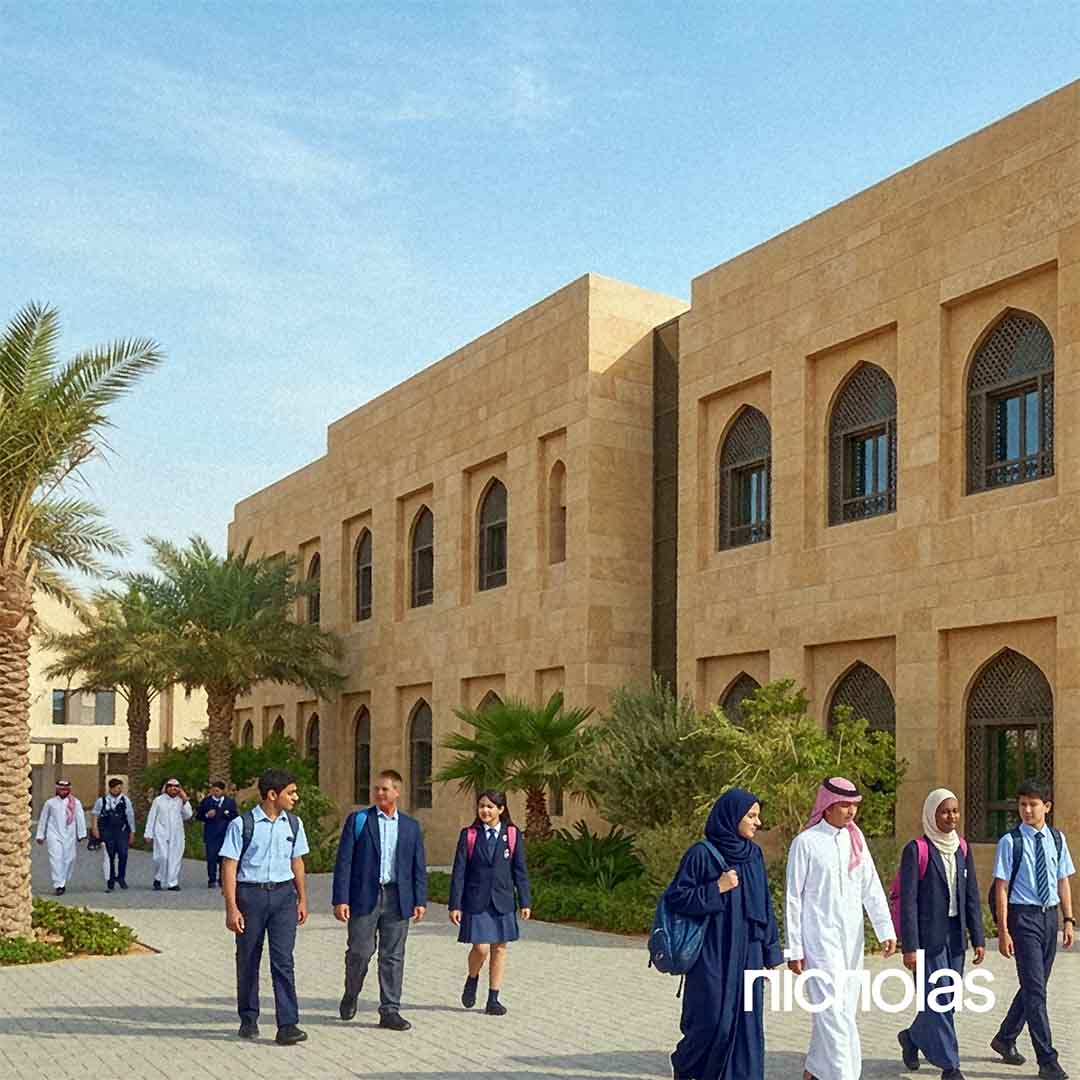
Across the Gulf, architecture plays an important role in expressing cultural and social values while responding thoughtfully to climate and context. Educational environments should reflect both contemporary ambitions and regional identity. With stone-clad colonnades, shaded walkways, deep-set windows, and generous outdoor spaces, architecture can create comfortable, human-scaled settings that encourage movement, collegiality, and year-round use.
These elements are not simply aesthetic references to traditional Gulf architecture – they are environmentally responsive design strategies rooted in place, culture and climate.
As cities across the region continue to evolve, educational buildings have an opportunity to reinforce identity, continuity and belonging while supporting new models of learning and community life. Schools should be visible civic anchors within the urban fabric, expressing the importance of education to society and contributing meaningfully to the public realm.
The future of education in the Gulf is not only about curriculum and technology – it is also about creating enduring places that bring communities together.