97
The Najdi Cultural Imperative
Culture has never been more important. Why?
In an age of creeping global sameness, we need differentiators both to stand out and to instil meaning.
Ideologically, the age of international modernism is dead. It died of boredom. If everything looks the same – and is the same – from Seattle to Singapore to Sydney, then what does it say about us as humans, and, frankly, what is the point?
Business needs differentiators. The era of ubiquitous global brands – products conceptualised in the West, manufactured in China, and distributed everywhere – is nearing an end. Regionalism – with location- and culturally-specific Saudi brands, UAE brands and Bahraini brands – is the way forward.
Global travel has entered a new era. People no longer want, or need, to travel to destinations which look and feel the same as their point of origin. Cities which emerge from the soup of similitude by celebrating and promoting uniqueness are the ones which will succeed in the twenty-first century arenas of economics, and personal and financial mobility.
Architecturally, the “critical regionalism” of Kenneth Frampton and Leon Krier, where design is rooted in place, culture and the environment, is in the ascendancy. This is the architecture of the specific, of established order and tradition – the architecture of King Charles, the architecture of King Salman.
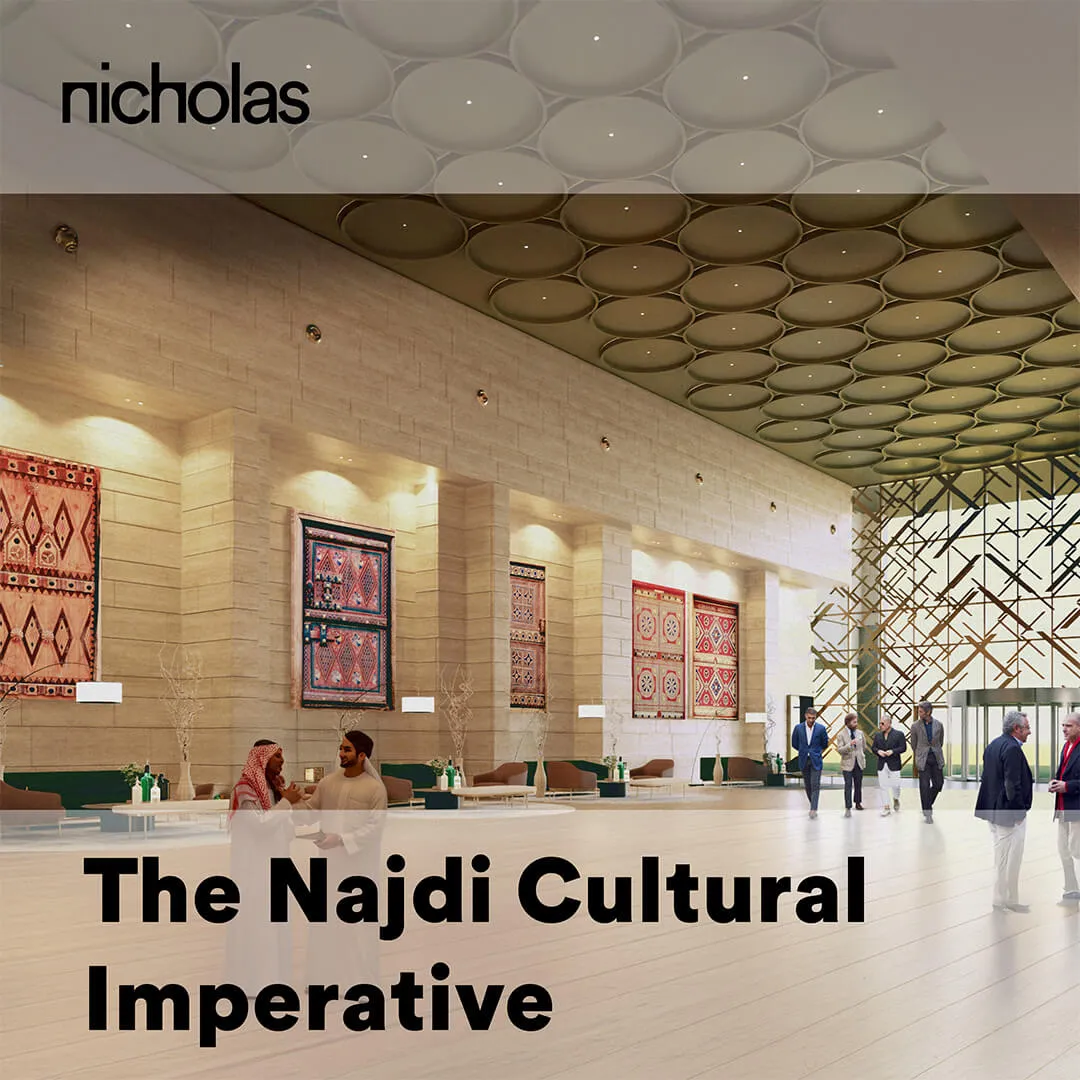
In Saudi Arabia’s capital city, the visual expression of culture through the Najdi style is therefore not “nice to have”, but rather imperative. What better way to celebrate and promote place than to engender its values?
The Najdi culture, it should be pointed out, is stylistically evolving. It is both backward- and forward-looking. Ontologically, it knows what it is, what it was, and what it hopes to become. Design is business. Architecture is business. And that’s a great business plan.