
125
Planned Communities – 7
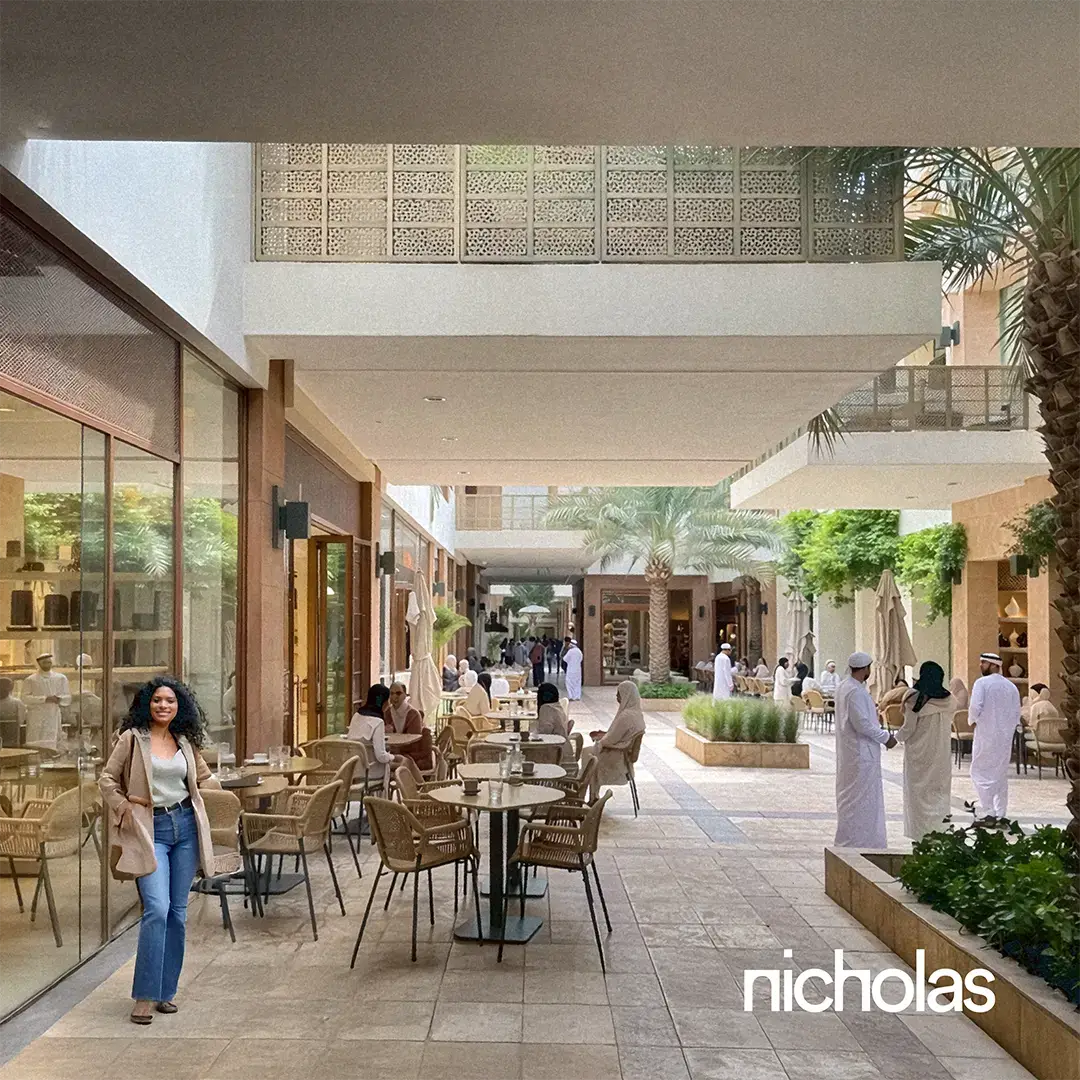
The souk was never just a market. It was the original mixed-use model, long before urban planners invented the term “mixed-use”.
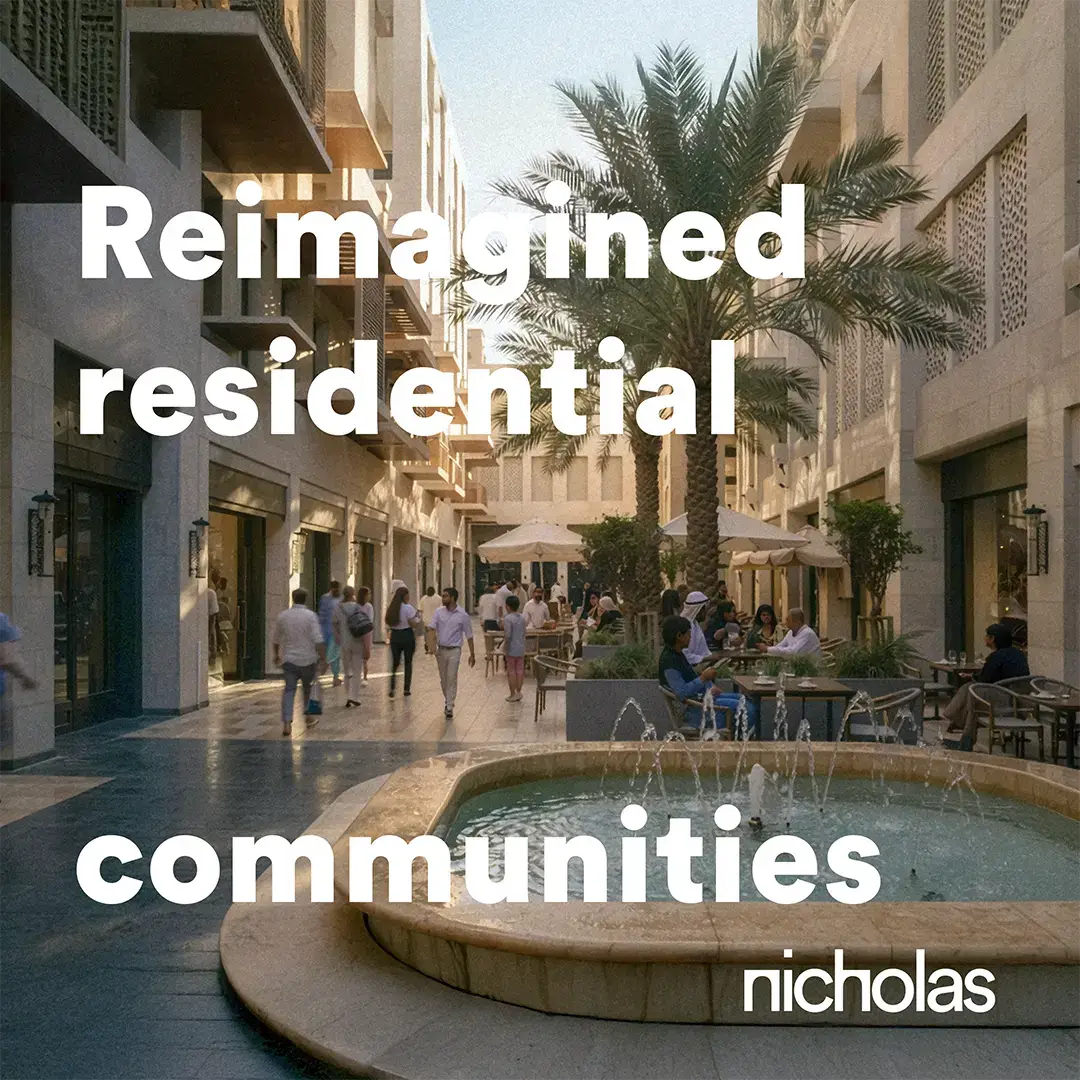
This iteration of the 7-minute residential souk, a proposition for Jeddah, takes that logic further. Buildings rise to five to seven storeys. The urban grain intensifies, yet human scale holds. Shaded alleyways and courtyards anchor movement on foot. Screened balconies reinterpret the mashrabiya, mediating light, privacy, and climate with quiet precision. Active edges keep the ground floor alive.
The conclusion is unmistakable: scalable neighbourhood models grounded in vernacular principles outperform generic master-planned estates on every measure that matters – social cohesion, adaptability, long-term economic resilience. Culture embedded within the urban fabric does not only adds value but compounds the return on investment.
The pedestrian and civic realms remain foundational within the model. Active edges, layered thresholds, and tightly knit streets foster a continuous, lived-in urban environment shaped around everyday life.
It’s an expandable system. A scalable neighbourhood model.
Rooted in culture. Adapted for modern urban life.