82
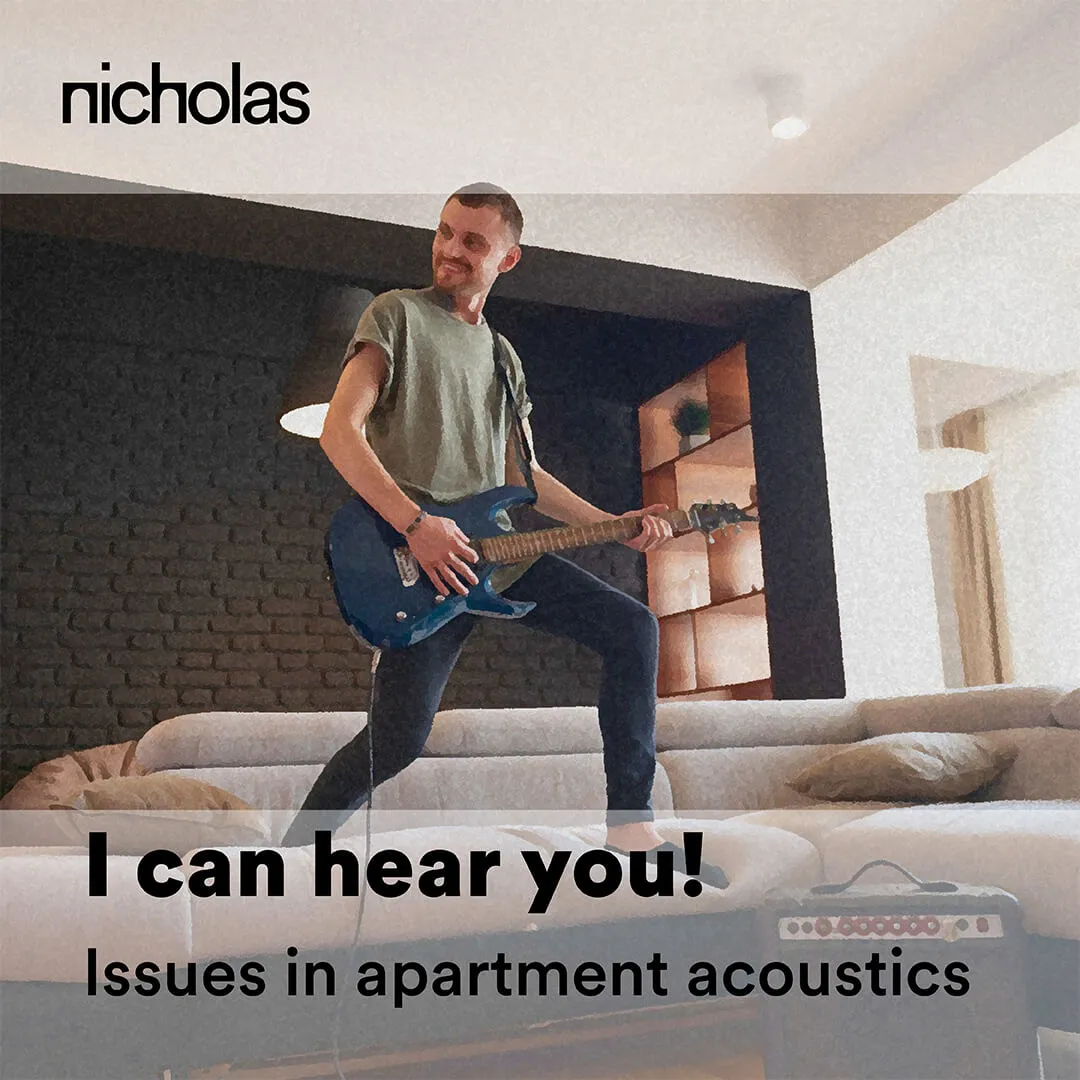
I Can Hear You! Issues in Residential Acoustics
Within our region, issues with residential acoustics have, to date, been largely glossed over. As we continue to build more apartments and townhouses, especially in giga projects, it’s an issue we cannot ignore.
While international codes set clear parameters for acoustic performance in residential buildings, local codes are silent – or hazy – on the topic. Many developments, even in the “luxury” sector, do not perform as they should.
Is it right, in a high-end apartment, to hear your neighbours flushing the toilet or their kids coming down the common corridor?
Broadly, there are three areas to consider: airborne sound transmission between occupancies, sound transmission through the building fabric (e.g. footfall) and sound transmission through the envelope (exterior noise).
Airborne sound is exacerbated by the Middle East’s propensity for glossy, hard surfaces on floors and walls – such as marble and granite. Lobbies and common areas are often poorly designed for sound (high reflectance, low absorption), and apartment doors are often not properly sealed. 200mm blockwork party walls are, without additional treatment, inadequate.
Sound impact transmission through the fabric is similarly exacerbated by hard surfaces and absence of carpeting. Hard flooring should always be installed over a rubber underlay, but this rarely happens. Sanitary drainage systems should be treated with acoustic lagging and changes in direction on vertical runs designed with care – but to find this is an exception.
Exterior noise is less of an issue in hermetically-sealed buildings – but who really wants to live in one of those? It’s time we considered the exterior noise profile when designing residential buildings so that the occupants can spend more time with the windows open.
Overall, we can and should do better. Are developers ready for the challenge?