95
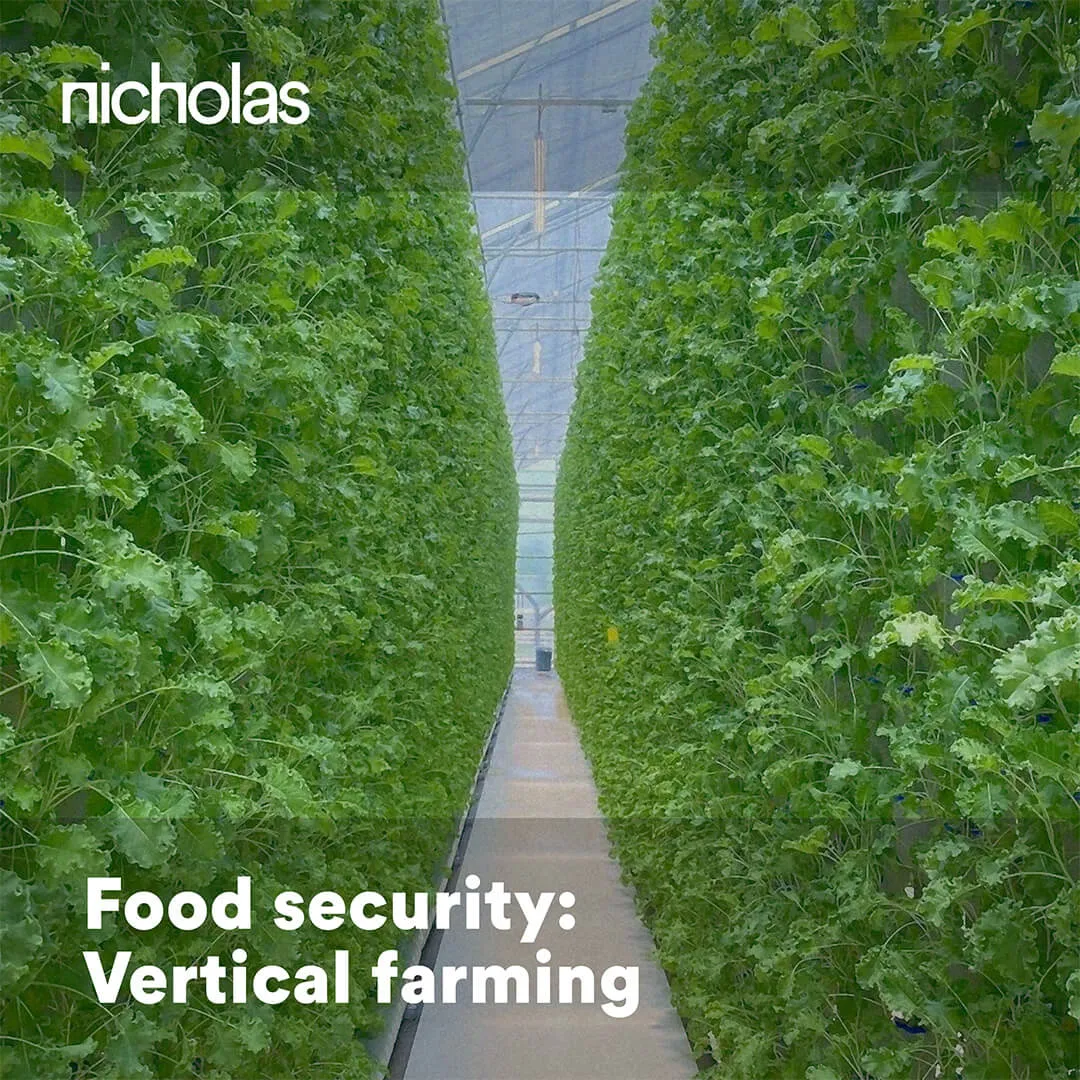
Food Security: Vertical Farming
In today’s geopolitically uncertain world, food security is one of the keys to national security.
Small nations with urban populations, or those with arid climates, face food security risks if traditional sources of fresh food imports dry up for reasons beyond their control.
With 68% of the world's population predicted to live in urban environments by 2050, could vertical farming offer a twenty-first century solution?
There are broadly two types of high-rise farms:
Mixed-use skyscrapers
These are vertical integrated developments used for farming and other uses such as habitation and office space. The concept is suited to small-scale farming serving local communities via farm-to-table style restaurants and community garden projects. Biophilic architect Ken Yeang was an early proponent.
Despommier's skyscrapers
These are single-use, purpose-built skyscraper farms. It is posited that this type of farming requires less energy per kilogram of output and produces less pollution than traditional farms. It creates a highly governable environment for temperature and pest control. The idea was advanced by ecologist Dickson Despommier.
Gulf countries are no strangers to intensive farming but the challenge, as farms spread out from cities, is developing the infrastructure needed to maintain them and managing distribution via the road network.
The ecological benefits of vertical farming are:
Improved air quality. Vertical farms can help improve air quality in urban environments. Reduced transportation logistics also positively impact air quality.
Reducing urban sprawl. Land within and surrounding the city can be more efficiently utilised. Land around cities can be maintained for parks and recreation.
Efficiency. Hydroponics have been able to produce crop yields that surpass traditional methods. They supply crops with water and nutrients at a higher efficiency and in a way which is less subject to seasonality.
Reduction in the use of agricultural chemicals. A controlled environment means fewer pests and diseases, and less need for chemicals.
A clean water source. Plants can be used to clean wastewater, and their respiration can be collected as clean, drinkable water.
Psychological. Connecting urban dwellers with co-located sources of food production, and reducing separation between people and natural process, has obvious social benefits.