92
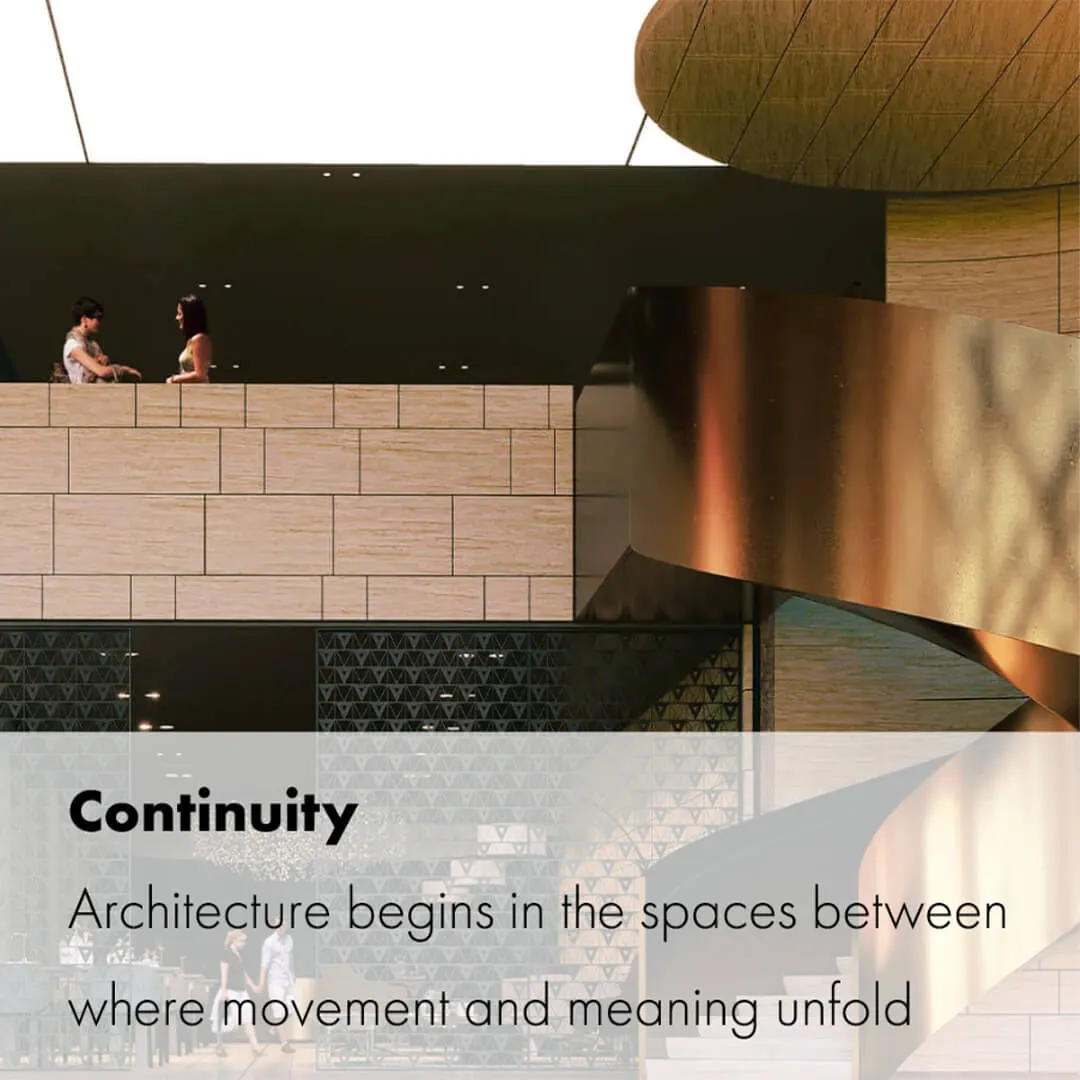
Continuity
What if architecture does not end at the threshold? For decades, we have been taught to design boundaries: clearly defined entrances, enclosed interiors, unambiguous divisions. And yet life has always unfolded in between. Transitional spaces, undervalued and often reduced to technical functions, can carry far greater meaning.
Gradual shifts in light, the texture of materials, or the direction of movement create an experience of the journey rather than merely the destination. This “in-between” encourages pause, encounter, and attentiveness. In a broader context, it represents a return to spatial thinking rooted in human scale and the rhythm of the body, familiar from historic cities, cloisters, and courtyards.
The conclusion is simple and concrete: designing continuity instead of barriers strengthens the relationship between people and space, improves comfort in use, and allows buildings to respond more effectively to change. It is architecture to be lived in, not merely looked at.