89
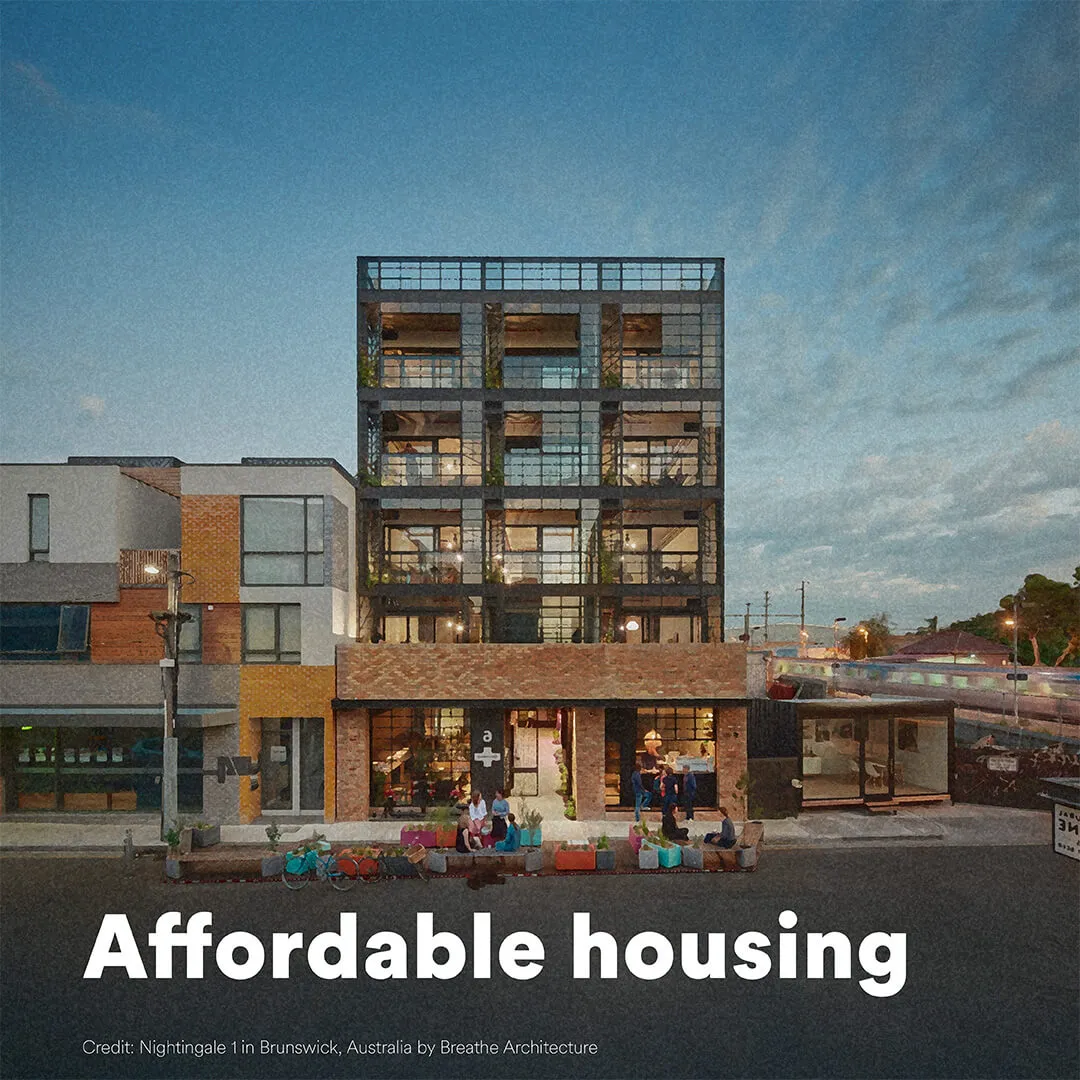
Affordable Housing
The effect of the Middle East housebuilding boom has been – ironically – to make it harder to house people. A shortage of housing at the right price points risks forcing millions out of the market.
House prices in Riyadh have risen more than 80%, and apartment prices more than 50%, in the past five years. In Dubai, rent on a basic one-bedroom apartment is almost three times what an average migrant worker earns.
With growing populations, matters are likely to get worse before they get better – even though some real estate segments are over-supplied.
Why is that?
Saudi giga projects have focused on luxury at scale, leaving income earners in the “squeezed middle” and lower segments under-served. The high-performing luxury segment in the UAE has had a similar effect.
Large-scale projects have inflated prices for both materials and labour, hurting affordable housing schemes, while at the same time higher prices skew feasibility studies towards production of further luxury product.
Rising interest rates and market corrections in Saudi Arabia have seen median incomes fall in real terms, with many buyers not able to pay the asking price of new housing.
Finally, it’s more expensive to build at higher densities – although density is what we need to meet demand.
What’s the solution?
Big developments will need to begin to look more closely at the needs of existing, rather than “target” populations.
Re-focusing the economy on growth areas outside the construction sector, for example in manufacturing and emerging technologies, would help lift incomes.
Supply chain improvements within the construction sector, such as in modular and off-site fabrication, would help deliver efficiencies.
Government incentives and/or law changes to aid in the buy-back and redevelopment of existing apartment stock close to urban centres would increase supply without the need for new supporting infrastructure.